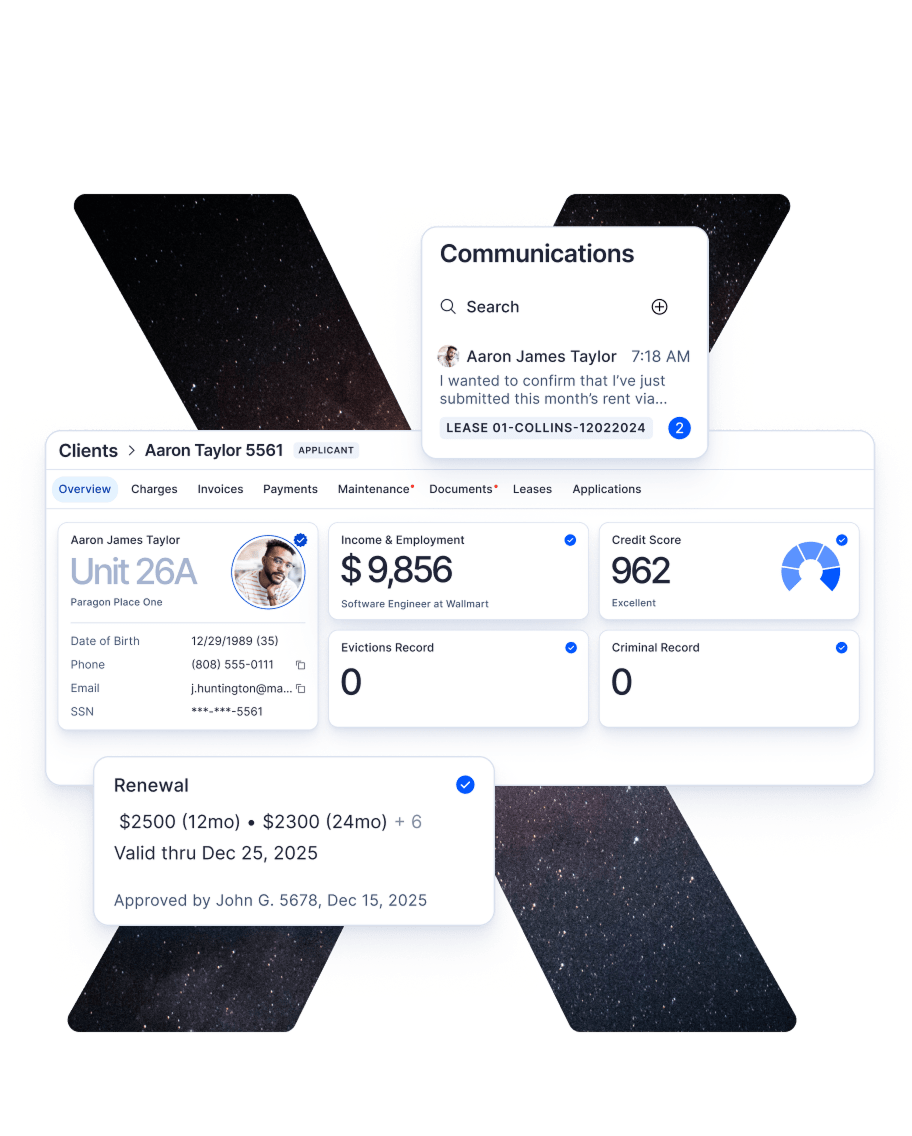
There's a $2 billion market that the PropTech industry has collectively decided to ignore. Not because it's too small — it's massive. Not because the problems aren't painful — they're excruciating. The mid-market landlord segment, property managers with roughly 10–200 units, falls into a dead zone between enterprise platforms and consumer-grade tools.
We've spent the last two years studying this gap, talking to hundreds of landlords, and building products specifically for this overlooked market. Here's what we found.
The Mid-Market Gap
The U.S. rental market has roughly 48 million rental units. The distribution looks something like this:
- Large institutional portfolios (500+ units): Well-served by enterprise platforms like Yardi, RealPage, and Entrata. These tools cost $5–$15 per unit per month and require dedicated staff to operate.
- Small single-property landlords (1–5 units): Adequately served by consumer tools like Avail, TurboTenant, or even spreadsheets. The complexity is low enough that basic tools suffice.
- The mid-market (10–200 units): Too complex for spreadsheets, too small for enterprise software. This segment manages roughly 8 million rental units and generates over $120 billion in annual rental income.
That last segment — the mid-market — is where the gap lives. These landlords face the same operational complexity as institutional managers: leasing workflows, maintenance coordination, utility billing, tenant screening, accounting, and compliance. But they don't have the budget for enterprise tools or the staff to operate them.
“I manage 85 units across four buildings. I need the same capabilities as someone managing 5,000 units — just at a price and complexity level that makes sense for my operation.”
Who Gets Ignored
The mid-market landlord is typically one of three profiles:
The Growing Owner-Operator
Started with a duplex, now manages 30–80 units. Wears every hat: leasing agent, maintenance coordinator, bookkeeper, and property manager. Their “tech stack” is a patchwork of spreadsheets, a free listing tool, WhatsApp for tenant communication, and a personal bank account that doubles as the operating account.
The Regional Property Manager
Manages 100–200 units for a handful of owners. Has 1–3 staff members. Tried Yardi once, spent three months in implementation, paid $8,000 in setup fees, and abandoned it because the complexity outweighed the benefit. Now runs on Buildium or AppFolio but still has gaps in screening, utility billing, and resident engagement.
The Accidental Portfolio
Inherited properties, acquired them through a 1031 exchange, or accumulated them over a decade. Owns 15–50 units but doesn't consider themselves a “property manager” in the professional sense. Needs software but doesn't want to become a software expert to use it.
All three profiles share common traits: they're time-constrained, budget-conscious, and need software that works out of the box without a dedicated admin.
Why Nobody Builds for Them
If the market is so large, why has it been ignored? The answer comes down to unit economics and go-to-market strategy.
Enterprise Is Easier to Monetize
A single enterprise deal — 5,000 units at $10/unit — is worth $50,000/month. To match that revenue from mid-market customers at $5/unit, you need 10,000 units spread across 50–100 separate accounts. The sales motion, onboarding, and support burden looks completely different.
The Feature Complexity Trap
Enterprise platforms have been building features for 15+ years. They have deep integrations with accounting systems, maintenance vendors, and regulatory databases. Building a competitive product from scratch seems insurmountable — especially when your target customer can only afford $200–$500/month.
The “Good Enough” Fallacy
Venture-backed PropTech companies assume mid-market landlords are “good enough” with basic tools. After all, they've been managing with spreadsheets for decades. But “good enough” is a trap. These landlords are losing money every month through inefficiency: missed rent, slow leasing turnovers, preventable maintenance escalations, and utility costs they can't recover.
We estimate that the average 50-unit landlord using manual processes loses $15,000–$25,000 per year in operational inefficiency. That's real money — and a real opportunity for software that captures even a fraction of that value.
What Mid-Market Landlords Actually Need
After hundreds of conversations with landlords in this segment, a clear picture has emerged. They don't want another “all-in-one platform.” They want specific, well-built tools that solve their most painful problems:
1. Tenant Screening That Actually Works
Most mid-market landlords rely on a single credit check and a gut feeling. They need multi-source verification — credit, criminal, eviction, income, and identity — with an automated decision framework that's consistent and legally defensible. Not a 45-page report they have to interpret manually.
2. Utility Billing Without the Spreadsheet
Master-metered properties need RUBS (Ratio Utility Billing Systems), but calculating allocations, generating invoices, and collecting payments manually takes 4+ hours per billing cycle. They need automation that handles the math, produces professional invoices, and tracks payments — without requiring an accounting degree.
3. Resident Communication at Scale
At 10 units, you can text every tenant individually. At 80 units, you need a system. They need centralized communication that handles routine inquiries automatically, routes maintenance requests to the right vendor, and keeps residents informed without requiring the landlord to be available 24/7.
4. Pricing That Scales with Them
Enterprise pricing models — annual contracts, setup fees, per-user licensing — don't work for a 30-unit landlord. They need per-unit pricing that starts low and scales linearly. No setup fees, no annual commitments, no hidden costs.
Filling the Gap
This is the thesis behind everything we're building at ParagonID. Our product suite — Leazbee, Leazpass, and QuickSplit — is designed specifically for the mid-market property manager:
- Leazbee provides AI-native property management with an intelligent concierge that handles resident inquiries, maintenance triage, and lease renewals — giving landlords back 10+ hours a week.
- Leazpass delivers AI-powered tenant screening with a proprietary risk score, multi-source verification, and automated decisioning — turning a 45-minute manual review into a 2-minute process.
- QuickSplit automates RUBS utility billing with OCR bill entry, instant allocations, professional invoicing, and online payment collection — replacing 4+ hours of spreadsheet work per billing cycle.
Each product is priced for the mid-market, designed to work out of the box, and built with AI at the core — not bolted on as an afterthought.
The $2B PropTech gap isn't a niche — it's the foundation of the American rental market. The landlords managing 10–200 units are the backbone of housing in this country, and they deserve tools built for them. See how we're building for them →
-min.jpg)